Tree Risk Assessment In Meridian
Know Your Trees Are Safe Before Problems Start
Proudly Serving Boise, Eagle, Meridian, Kuna, Emmett, Star, Nampa, Mountain Home And Surrounding Areas
Meridian's Growth Conditions Create Tree Problems That Aren't Always Visible
How Local Soil Conditions Quietly Affect Structural Integrity
Meridian sits on heavy alkaline clay soils that make it genuinely hard for trees to thrive long-term. If you’ve scheduled a tree risk assessment in Meridian, that soil context matters more than most people expect. Alkaline soil interferes with how trees absorb iron, which leads to iron chlorosis – a condition where leaves yellow and the tree slowly loses vigor even when it looks mostly fine from the street.
Restricted root development is the other side of this. Clay soils compact easily, and once compacted, roots can’t spread or anchor the way they need to. In areas along Linder Road where builder-planted trees are now maturing, that root-zone stress is showing up as structural defects that weren’t visible a few years ago.
Construction stress compounds this. In the Ten Mile interchange corridor, rapid development has put existing trees under pressure from soil compaction and critical root zone damage. A tree can absorb that kind of disruption for years before anything visible signals a problem.
If your tree looks healthy on the outside, that doesn’t mean its structural integrity is solid. Weakened root systems and internal stress often go undetected without a formal assessment from a TRAQ-qualified arborist who understands how Meridian’s soil conditions affect tree health over time.
Get A Tree Risk Assessment Today
Most People Assume a Tree Is Fine Until Something Falls
What a Tree Risk Assessment Catches Before Visible Symptoms Appear
A tree that looks full and green feels safe. That assumption makes sense on the surface, but it’s where most tree failures actually begin.
Internal decay, included bark, and biomechanical stress don’t announce themselves. A tree can lose significant structural integrity while its crown stays full and its bark looks clean. By the time you notice something wrong, a failure event may already be in motion. This is especially true in Linder Road subdivisions, where builder-planted trees are maturing faster than their root systems can support them.
A Level 2 Assessment using ground-based inspection works through this problem systematically. It evaluates the likelihood of failure, identifies target zones where a falling limb or trunk would land, and applies compartmentalization of decay principles to understand how far internal decay has spread. This is the ISA framework for tree risk assessment, and it’s built specifically to find what a visual guess won’t.
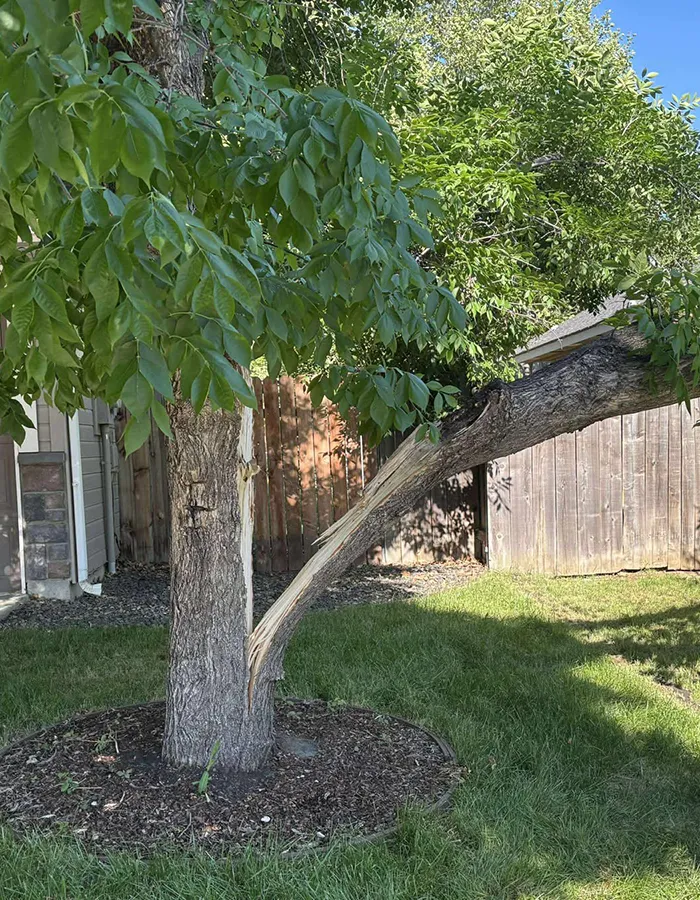
If a tree has dropped a large limb recently, or you’re looking at a trunk that doesn’t quite seem straight anymore, decay detection through a structured assessment gives you a concrete answer. Not a feeling. Not a guess. An actual risk rating you can act on.
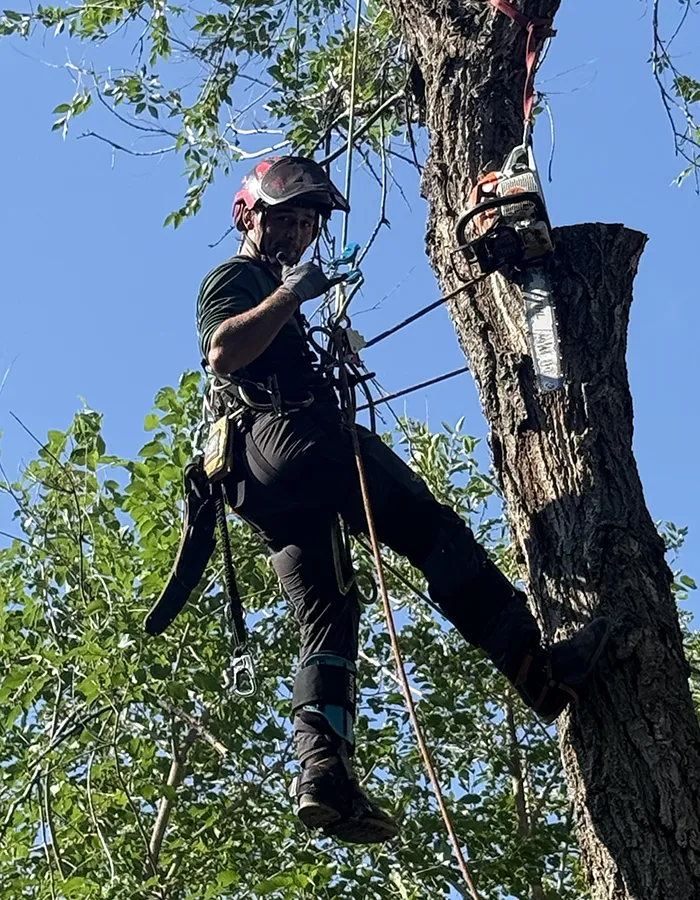
What the TRAQ Credential Actually Means for Your Arborist Report
Not every ISA Certified Arborist is qualified to produce a formal written risk assessment. The Tree Risk Assessment Qualification (TRAQ) is a separate credential issued by the International Society of Arboriculture specifically for that purpose. It trains arborists in a standardized risk-rating methodology, the framework that makes an arborist report usable in legal, financial, and insurance contexts.
If you’re dealing with a neighbor dispute, an insurance claim, or a tree flagged during a real estate transaction in Meridian, a general inspection opinion won’t hold up. You need a written report from a TRAQ-qualified consulting arborist that assigns a documented risk rating using a recognized evaluation system.
On The Block holds both credentials: ISA Certified Arborist and TRAQ-qualified. That combination means the reports produced here follow the same methodology insurers, attorneys, and real estate professionals expect. If you’re a landlord managing a rental property near the Linder Road subdivisions and a tree on your lot is a liability concern, a properly structured arborist report gives you documented, defensible standing.
This isn’t about upselling a fancier inspection. TRAQ exists because tree risk evaluation has real consequences, and the credential ensures the person writing your report actually knows the standard.
What Happens During a Professional Tree Risk Assessment in Meridian
From First Look to Written Report: How the Assessment Process Works
The assessment starts with a ground-based inspection of the full tree. Species identification comes first, because tree species determines what defects to look for and how seriously to weigh them. A mature oak along the Meridian Road corridor behaves very differently under stress than a builder-planted ornamental pear in a newer subdivision.
From there, the arborist systematically works through the crown, trunk, and root zone. The arborist evaluates crown structure for included bark, dead branches, and signs of structural failure. The trunk is checked for cavities, cracks, and decay. The root zone inspection looks at soil conditions, surface roots, and anything indicating instability below grade.
Decay detection is part of the process too. Not every defect is visible from the outside, so the arborist uses hands-on techniques to identify internal compromise before it becomes a problem you can see from your window.
All of it gets compiled into a written arborist report with a risk rating and clear mitigation options. If work is needed, you can schedule tree cabling and bracing, structural pruning, crown thinning, deadwood removal, or tree removal without bringing in a second contractor. Plant health care and tree health assessment findings get addressed by the same crew that completed the evaluation. You get one point of contact and a clear path forward.
Tree Removal
Safe efficient removals
Tree Trimming
For beautiful, healthy trees
Emergency Tree Services
Emergency tree services to keep you safe
Arborist Consultation
Professional tree health evaluations
Tree Risk Assessment
Identify hazards and protect property
Specialty Pruning
Improve structure, safety, and tree health
A Tree That Seems Stable Today Can Change. Here's What to Watch For
Signs That Make a Formal Assessment Worth Scheduling Sooner Rather Than Later
Say a windstorm moves through, and the next morning you notice your large backyard tree is leaning a few degrees more than you remembered. Nothing fell. No visible cracks. But something feels different. That moment is exactly when a tree health evaluation makes sense.
Trees don’t stay in the same condition year after year. Storm damage, even from a storm that doesn’t cause obvious destruction, can shift how weight is distributed through the trunk and crown. A large limb drop that seemed like a one-off event often signals that structural failure is already in progress elsewhere in the tree.
If you’ve noticed crown dieback, visible cavities in the trunk, or bark that looks cracked or sunken near the base, pay attention. These signs are showing up more frequently as trees hit maturity without proper structural pruning early on.
A formal assessment gives you a written answer. Not a guess or a neighbor’s general opinion. A documented evaluation of whether your tree is hazardous, the actual likelihood of failure, and whether options like deep root fertilization or other residential tree service approaches exist before removal becomes the only path forward.
ISA-Certified Arborists On Staff (PN-9369A)